How to Answer "Describe a Project That Failed": The Complete Interview Guide (2026)
"Describe a project that failed" appears in over 70% of professional interviews across all career levels. This question reveals your ability to handle challenging situations, demonstrate resilience and learning, maintain professionalism under pressure, take accountability for outcomes, and achieve results despite obstacles. Research shows that professionals who excel in these situations advance 30% faster than peers who struggle with similar challenges.
This comprehensive guide provides 15+ STAR method examples, frameworks for different scenarios, and strategies for demonstrating how you turn challenges into opportunities for growth and achievement.
Why Interviewers Ask This Question
Assessing Problem-Solving Capability
Organizations need people who can navigate complex challenges. Your response reveals whether you can analyze situations systematically, develop creative solutions to obstacles, adapt approach when initial plans don't work, and achieve results despite constraints.
Evaluating Professional Maturity
How you handle difficulties reveals character. Interviewers assess whether you take accountability for outcomes, maintain composure under stress, learn from challenging experiences, and focus on solutions rather than excuses.
Understanding Resilience
Setbacks test resilience and determination. Your story shows whether you persist through obstacles, recover quickly from failures, maintain motivation despite challenges, and view difficulties as learning opportunities.
Measuring Communication Skills
Challenging situations require excellent communication. Interviewers evaluate whether you communicate transparently about problems, manage stakeholder expectations effectively, build support and collaboration, and maintain relationships through difficulties.
Gauging Results Orientation
Achievement despite challenges demonstrates drive. Your example reveals whether you maintain focus on objectives, find creative paths to goals, leverage available resources effectively, and deliver results regardless of obstacles.
The STAR Method Framework
Situation (15%)
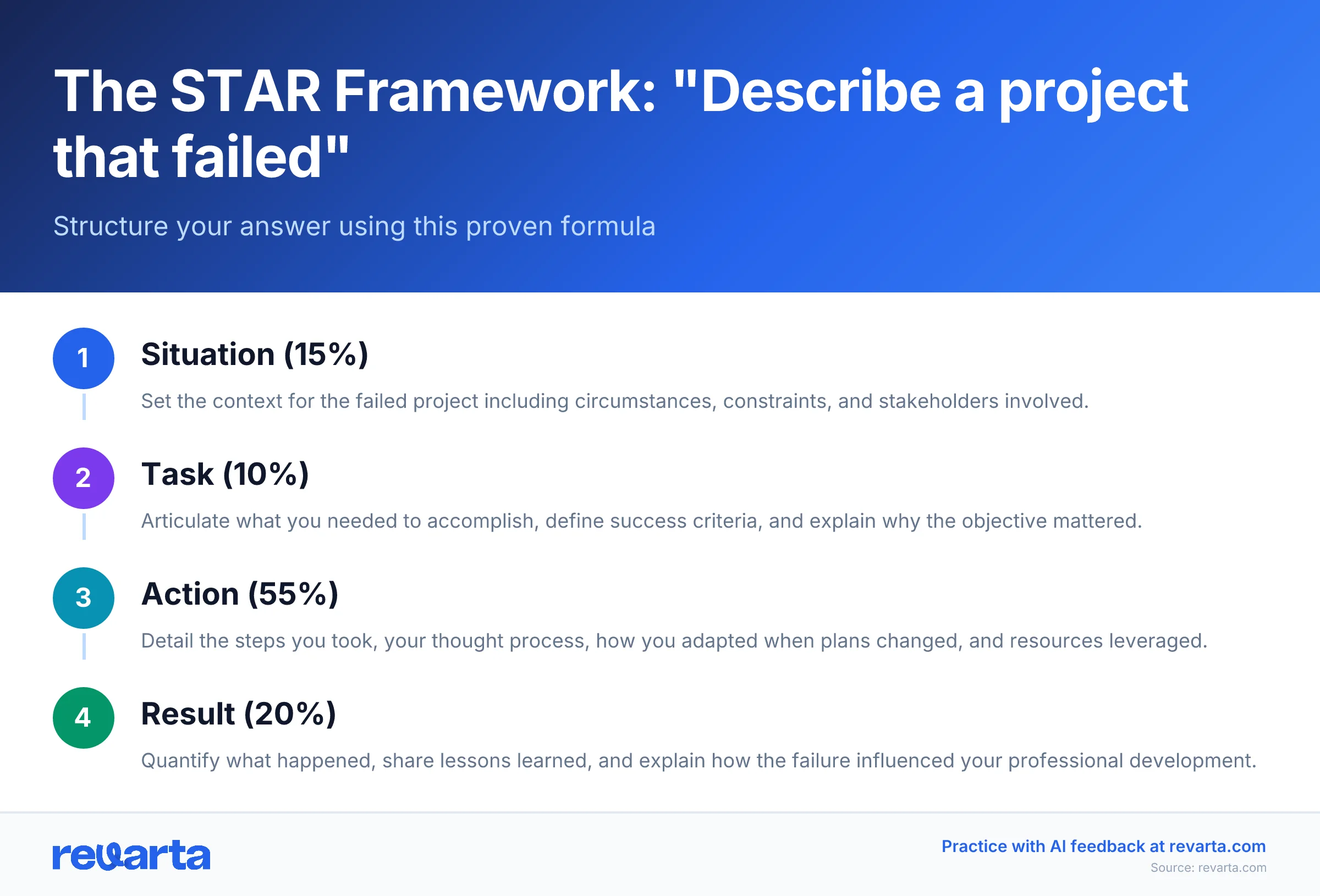
Set the context for the challenge you faced, describing the specific circumstances, constraints, and stakeholders involved. Be concise but provide enough detail for the interviewer to understand the complexity.
Example Structure: "As [your role] at [organization], I faced [specific challenge] involving [key stakeholders/constraints]. The situation was particularly difficult because [what made it challenging]."
Task (10%)
Clearly articulate what you needed to accomplish despite the challenges. Define success criteria and explain why this objective was important.
Example Structure: "I needed to [specific objective] while [managing constraints]. Success meant [measurable outcomes] and was critical because [business impact]."
Action (55%)
Detail the specific steps you took to address the challenge. Focus on YOUR actions using "I" statements. Show your thought process, decision-making, and how you adapted when faced with obstacles.
Key Elements to Include:
- Initial assessment and analysis
- Strategy development
- Stakeholder communication
- Problem-solving approaches
- Adaptation when plans changed
- Resources leveraged
- Collaboration and support sought
Result (20%)
Quantify outcomes and impact. Share both immediate results and longer-term effects. Include lessons learned and how the experience influenced your professional development.
Metrics to Consider:
- Business outcomes achieved
- Efficiency improvements
- Cost savings or revenue impact
- Quality improvements
- Stakeholder satisfaction
- Team performance
- Personal growth and learning
15+ Detailed Examples Across Industries
Entry-Level Example
Successfully delivered project despite tight deadline and limited experience through proactive learning, seeking mentorship, and systematic task management.
Mid-Career Example
Achieved objectives with budget cuts by prioritizing ruthlessly, finding creative alternatives, and leveraging partnerships to stretch resources.
Senior Leadership Example
Turned around failing initiative by diagnosing root causes, rebuilding team morale, restructuring approach, and achieving targets within revised timeline.
Technology Sector
Implemented system migration during production issues by phased rollout, comprehensive testing, and maintaining business continuity.
Healthcare Industry
Maintained patient care quality during staffing shortage through cross-training, schedule optimization, and team collaboration.
Financial Services
Delivered analysis despite incomplete data by finding proxy metrics, validating assumptions, and communicating confidence levels transparently.
Sales Organization
Exceeded quota despite territory challenges by developing new market segments, building strategic partnerships, and innovative outreach.
Customer Success
Saved at-risk account through root cause analysis, service recovery plan, executive engagement, and demonstrating value.
Operations Management
Improved efficiency with minimal budget through process redesign, employee engagement, and leveraging existing resources creatively.
Human Resources
Completed recruitment during hiring freeze by internal mobility, succession planning, and capability development programs.
Marketing Department
Launched campaign with reduced budget through digital focus, earned media, user-generated content, and partnership leverage.
Consulting Engagement
Delivered client value despite scope changes by flexible approach, continuous stakeholder alignment, and phased delivery model.
Education Sector
Achieved learning outcomes despite resource constraints through curriculum innovation, community partnerships, and technology leverage.
Nonprofit Organization
Accomplished mission goals during funding challenges through grant diversification, volunteer engagement, and program efficiency.
Real Estate Business
Closed transactions despite market conditions through creative structuring, relationship leverage, and persistent problem-solving.
Common Variations of This Question
- "Describe overcoming a significant obstacle"
- "Tell me about achieving results despite challenges"
- "Give an example of persisting through difficulties"
- "Describe a time resources were limited"
- "Tell me about working under constraints"
Advanced Strategies
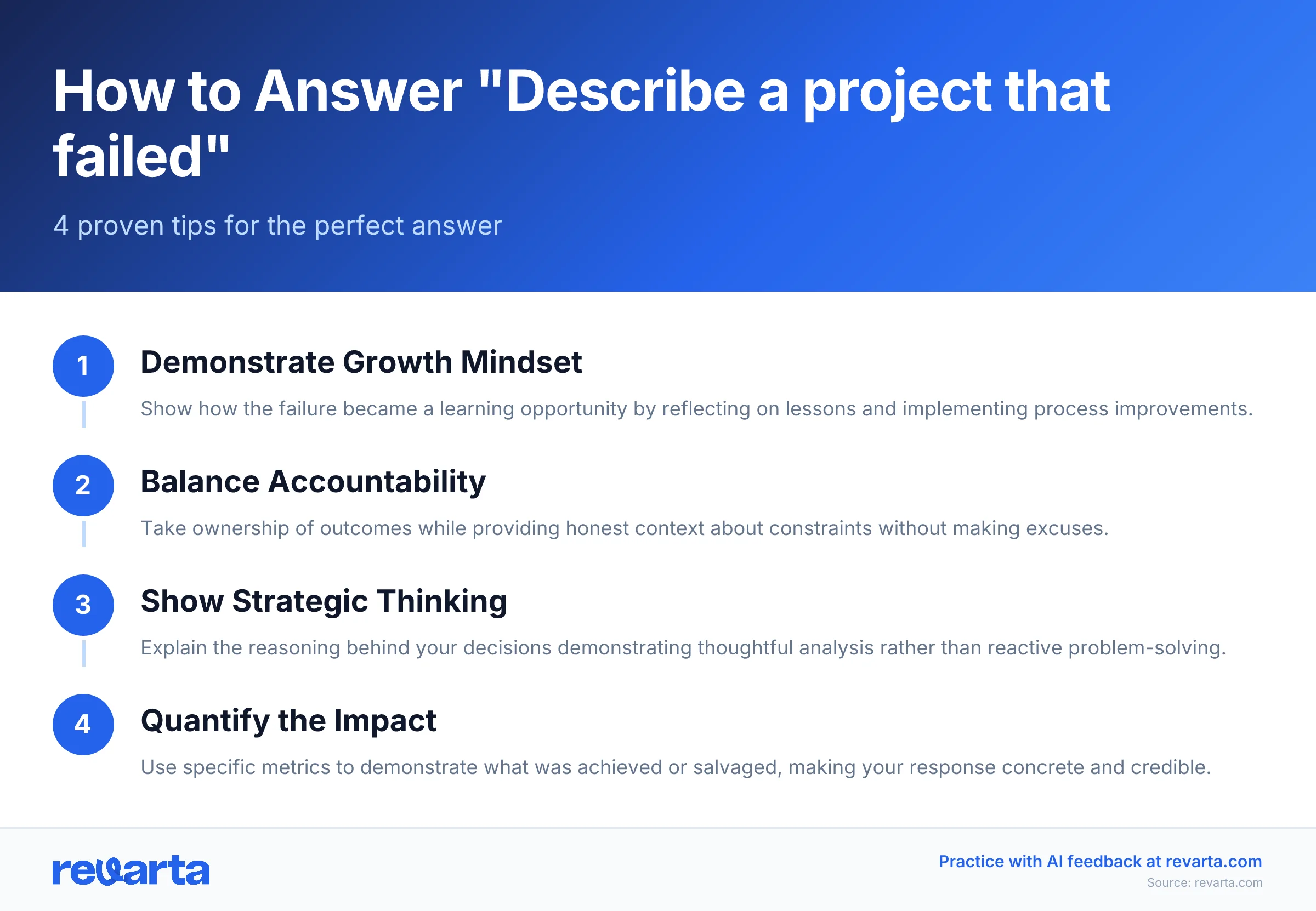
Demonstrating Growth Mindset
Show how challenges became learning opportunities by reflecting on lessons learned, implementing process improvements, and applying insights to future situations.
Balancing Accountability with Context
Take ownership of outcomes while providing appropriate context about constraints. Avoid making excuses while being honest about difficulties faced.
Showing Strategic Thinking
Explain the reasoning behind your decisions, demonstrating thoughtful analysis rather than just reactive problem-solving.
Quantifying Impact
Use specific metrics and data to demonstrate results achieved, making your accomplishments concrete and credible.
Common Mistakes to Avoid
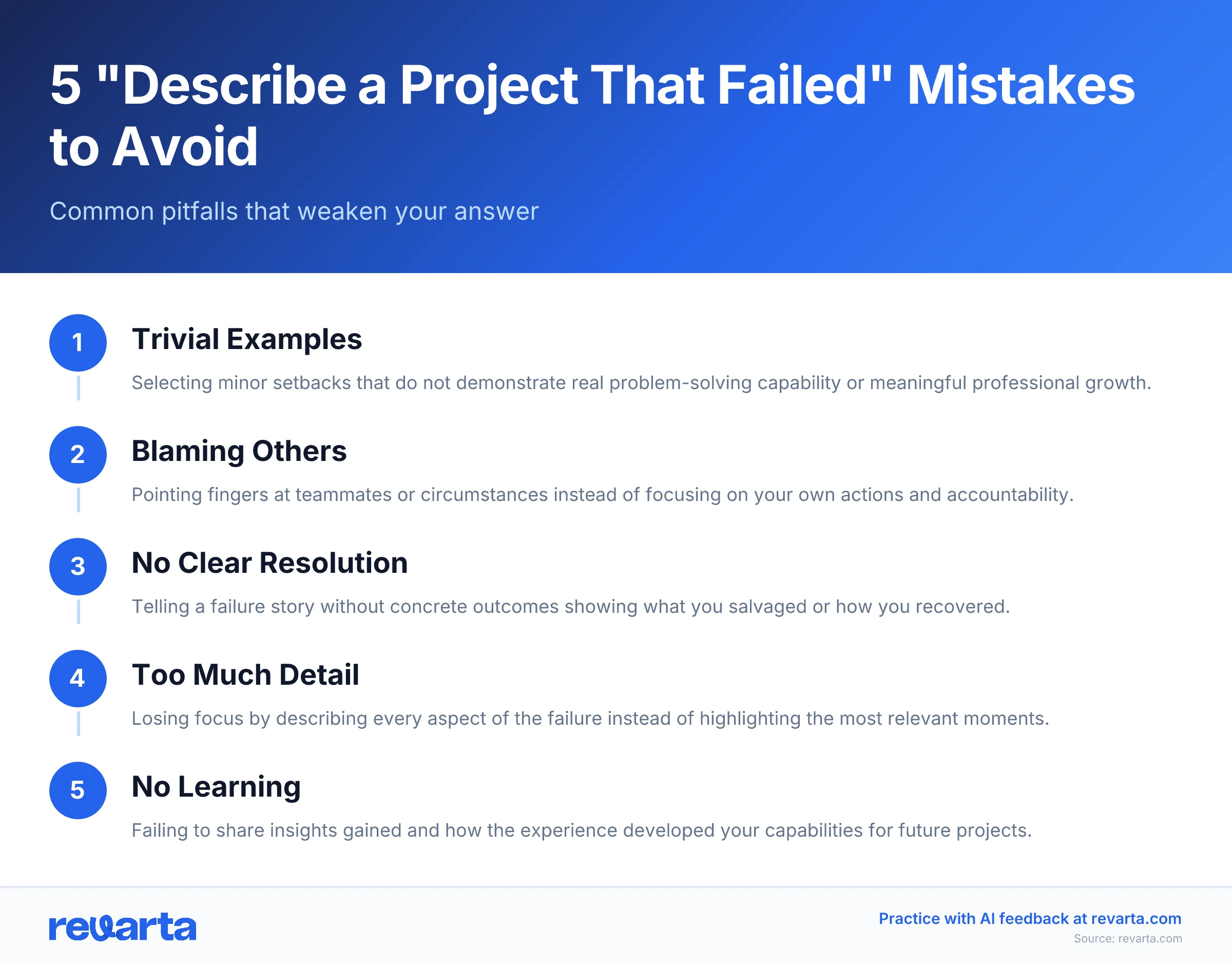
- Choosing trivial examples: Select challenges that demonstrate real problem-solving capability
- Blaming others: Focus on your actions and accountability rather than pointing fingers
- No clear resolution: Ensure your story has concrete outcomes and results
- Too much detail: Stay focused on the most relevant aspects of the situation
- No learning: Share insights gained and how the experience developed your capabilities
Follow-Up Questions to Expect
- "What would you do differently if faced with a similar situation?"
- "How did this experience shape your approach to challenges?"
- "What was the most difficult aspect of this situation?"
- "How did you maintain team morale during this time?"
- "What lessons have you applied from this experience?"
Industry-Specific Considerations
Technology: System constraints, technical debt, rapid change, innovation pressure
Healthcare: Regulatory compliance, patient safety, resource limitations, quality standards
Finance: Risk management, regulatory requirements, market volatility, stakeholder pressure
Sales: Market conditions, competitive pressure, quota expectations, customer dynamics
Marketing: Budget constraints, changing consumer behavior, competitive landscape, ROI pressure
Operations: Efficiency demands, quality requirements, cost pressure, process complexity
Conclusion
Mastering this interview question requires selecting examples that demonstrate your resilience, problem-solving capability, and results orientation. The strongest answers show how you maintained professionalism, took accountability, achieved meaningful results, and learned valuable lessons that enhanced your professional capabilities.
The most impressive responses demonstrate not just overcoming challenges, but growing through them—showing interviewers that difficulties make you stronger, more capable, and more valuable as a professional.
Practice your answer with AI-powered feedback
Keep Preparing


