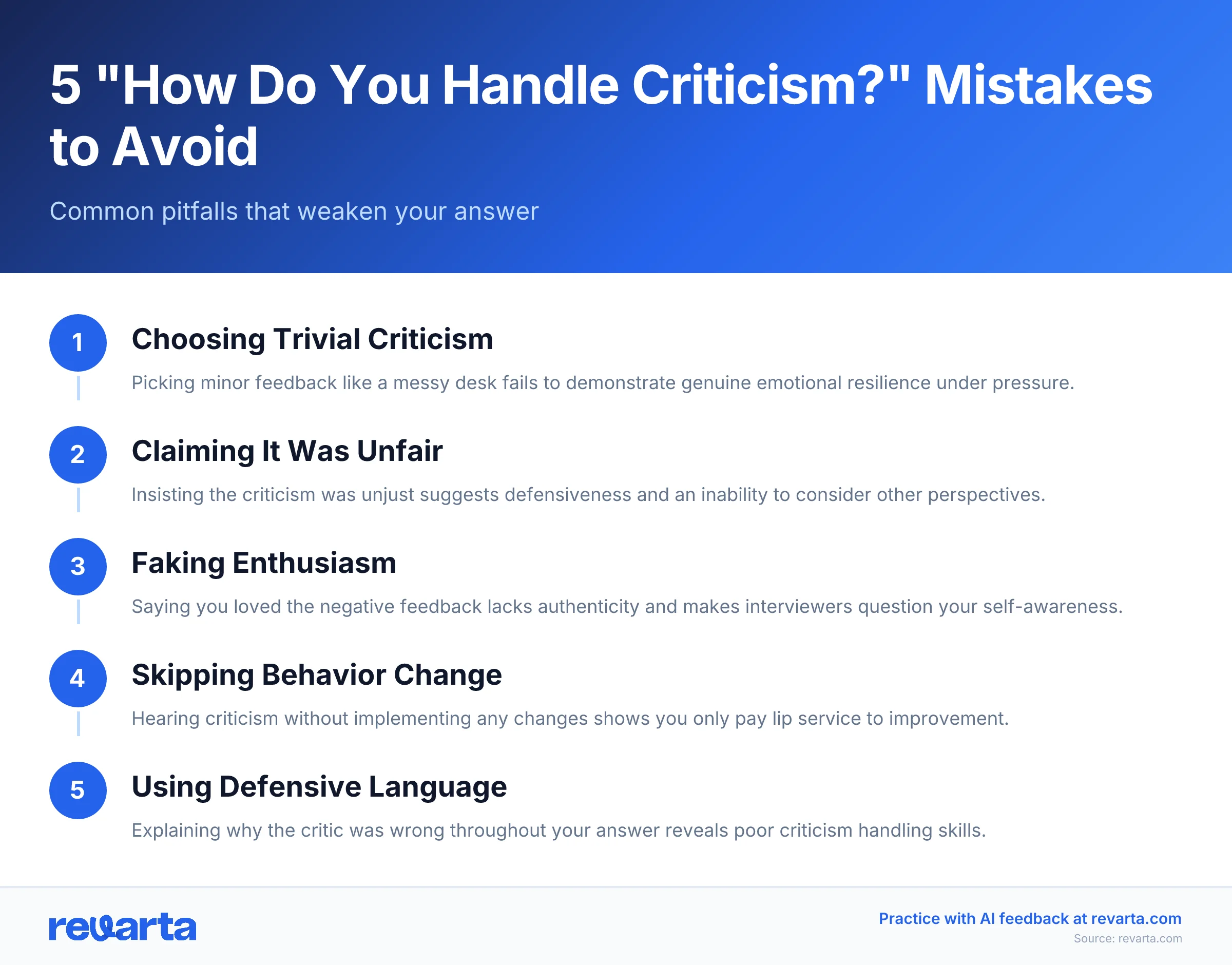
How to Answer "How Do You Handle Criticism?": The Complete Interview Guide (2026)
"How do you handle criticism?" appears in over 80% of professional interviews at all career levels. This question reveals your emotional resilience, ability to separate personal identity from work critique, capacity for non-defensive listening, openness to improvement and growth, and professional maturity under negative feedback. Research from Google's Project Oxygen shows that how employees respond to criticism is one of the strongest predictors of long-term success and leadership potential.
This comprehensive guide provides 15+ STAR method examples, frameworks for demonstrating emotional intelligence under criticism, and strategies for showing how you transform critique into professional development.
Why Interviewers Ask About Handling Criticism
Assessing Emotional Regulation
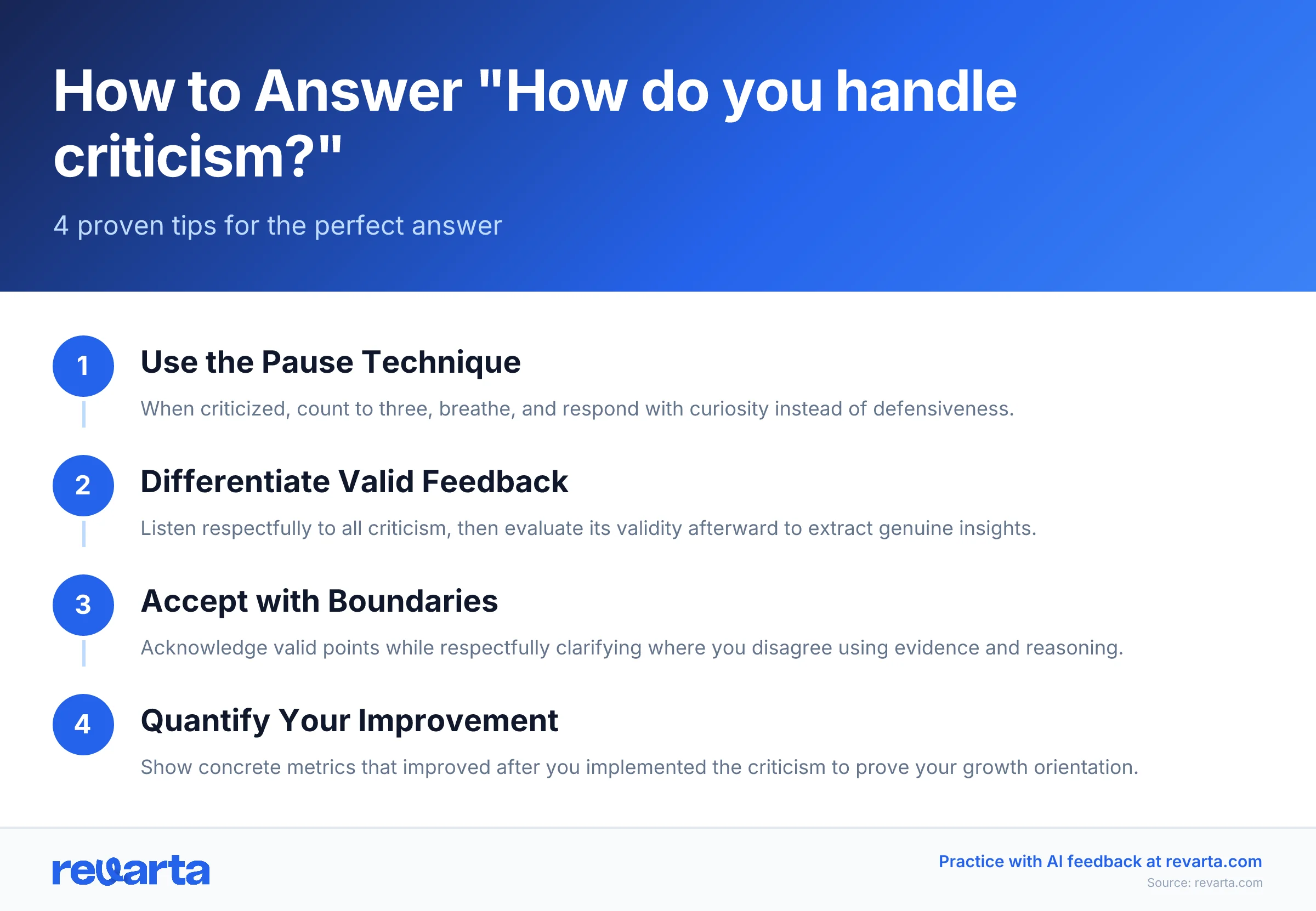
Criticism triggers defensive reactions in most people. Your response reveals whether you can manage emotional responses professionally, listen without interrupting when criticized, separate work critique from personal attack, and maintain composure under negative feedback.
Evaluating Professional Maturity
How you handle criticism reveals professional development. Interviewers assess whether you can accept that you're not perfect, acknowledge valid criticisms without defensiveness, take ownership of mistakes and weaknesses, and view criticism as information rather than judgment.
Understanding Learning Orientation
Organizations need people who learn from critique, not resist it. Your story shows whether you extract valuable insights from criticism, implement feedback rather than ignoring it, seek understanding when criticism is unclear, and accelerate growth through external perspectives.
Measuring Self-Awareness
Self-aware professionals recognize their blind spots. Interviewers evaluate whether you understand your weaknesses accurately, recognize valid criticism even when uncomfortable, distinguish between constructive and destructive criticism, and maintain realistic self-perception.
Gauging Resilience
Criticism tests resilience and recovery capability. Your example reveals whether you bounce back quickly from negative feedback, maintain confidence despite critique, continue performing after being criticized, and separate single incidents from overall capability.
The STAR Method for Criticism Questions
Situation (15%)
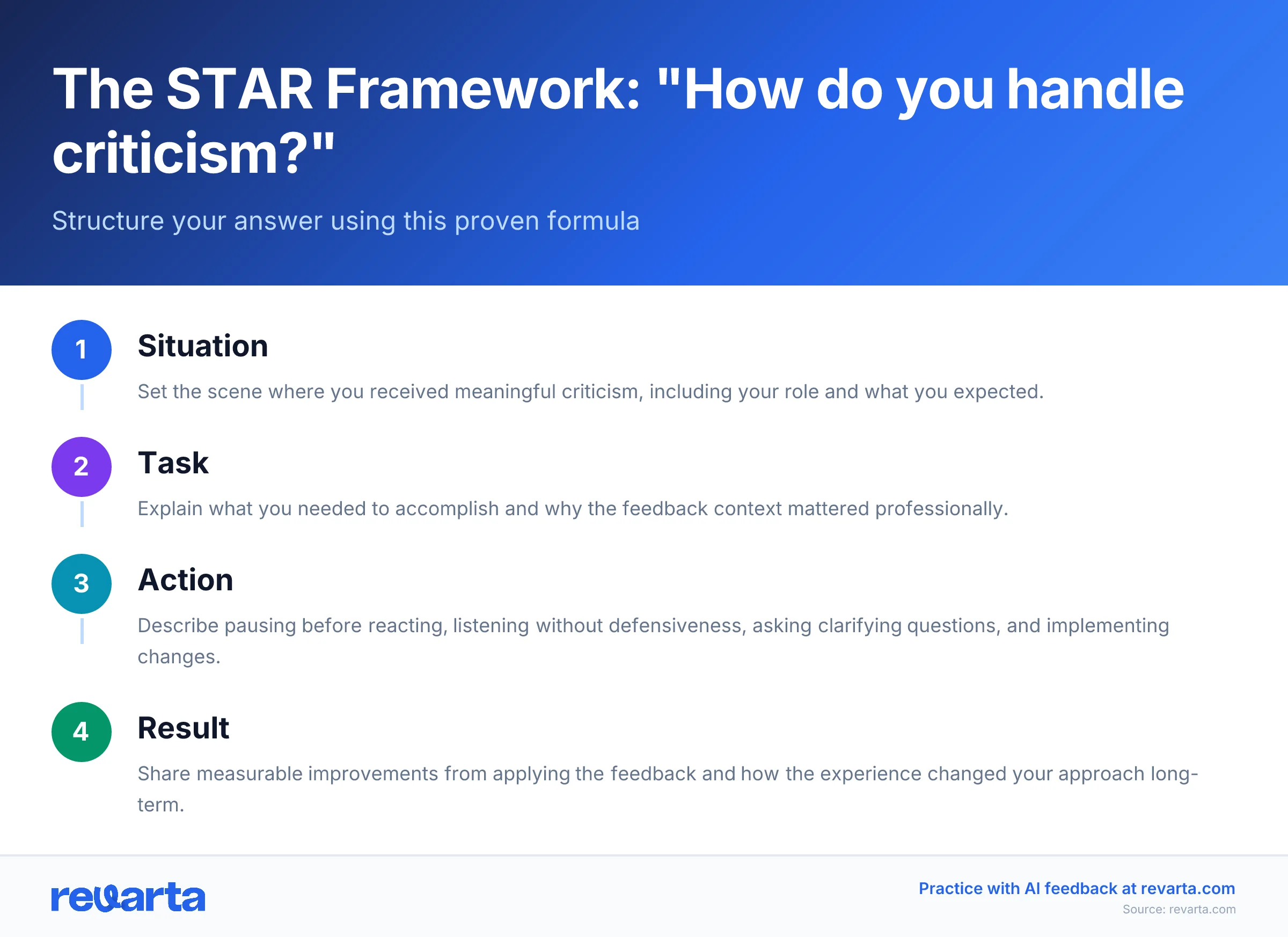
Example:
"During my second year as a marketing specialist at BrandCo, I led our first major influencer marketing campaign. I had researched extensively, selected influencers carefully, and created what I believed was a compelling creative brief. I presented my complete campaign strategy to our CMO and marketing leadership team, expecting positive feedback and approval to proceed."
Task (10%)
Example:
"I needed to receive the leadership team's feedback on my campaign strategy, address any concerns or criticisms they raised, refine my approach based on their input, and ultimately get approval for a $200K campaign investment."
Action (55%)
Example:
"When I finished my presentation, the CMO's first words were: 'This completely misses our brand positioning. The influencer selections feel random, and the creative concept doesn't align with our Q3 messaging strategy at all.'
My immediate internal reaction was defensive hurt. I had spent three weeks on this strategy and genuinely believed it was strong. I wanted to explain all my research and justify my decisions. But I forced myself to pause, take a breath, and simply say: 'Tell me more about what's not working.'
The CMO elaborated: the influencers I selected had the right reach but wrong audience demographics for our target customer. My creative concept was creative, but it didn't connect to the product benefits we needed to emphasize that quarter. The campaign timing conflicted with other marketing initiatives I hadn't been aware of.
As she spoke, I took notes rather than formulating rebuttals. I asked clarifying questions: 'What audience demographics should I prioritize?' and 'What are the Q3 messaging priorities I should align with?'
The criticism was painful to hear publicly in front of the leadership team, especially as a relatively junior team member. But I recognized that the CMO's points were valid—I had focused on creative execution without adequate strategic alignment.
After the meeting, I could have sulked or made excuses. Instead, I scheduled a follow-up with the CMO: 'Thank you for the direct feedback. I'd like to revise this strategy with your input. Can we schedule 30 minutes to ensure I understand the strategic context better?'
In that follow-up meeting, I asked questions to understand the broader business context I had missed: What were our Q3 business objectives? How did influencer marketing fit into our overall positioning? What audience segments were highest priority?
Over the next week, I completely redesigned the campaign strategy. I selected different influencers based on audience demographics rather than just reach metrics. I aligned the creative concept with our product messaging priorities. I coordinated timing with other marketing initiatives.
When I re-presented the revised strategy, I explicitly referenced the CMO's feedback: 'Based on your input about audience alignment and Q3 messaging priorities, here's the revised approach...'
This version was approved with minor adjustments, and I made sure to thank the CMO for the criticism that had improved the campaign."
Result (20%)
Example:
"The revised campaign exceeded performance benchmarks by 35%, generating 12,500 qualified leads compared to our 8,000 target. The audience engagement rates were 2.3x higher than our previous influencer campaigns.
More importantly, the CMO later told me that my response to criticism—listening without defensiveness, asking good follow-up questions, and implementing feedback thoroughly—was what convinced her I was ready for more strategic responsibilities. I was promoted to Senior Marketing Specialist six months later.
This experience fundamentally changed how I process criticism. I learned that my initial emotional reaction to criticism—defensiveness, hurt, desire to justify—is normal but shouldn't dictate my response. The pause between receiving criticism and responding is where professionalism lives.
I discovered that the criticism that stings most often contains the most valuable insights. If feedback doesn't bother me, it's probably about something I already knew or didn't care about. The criticism that hurts usually touches on real blind spots or areas where I'm overconfident.
Most significantly, I realized that criticism in front of others is a gift, not an embarrassment. Public criticism means the person believes you're capable of improvement and worth the investment of their feedback. Now when I receive criticism publicly, I remind myself: they're giving me information to get better, not attacking me as a person.
I've since developed a practice after receiving any significant criticism: I wait 24 hours before deciding how to respond. This cooling-off period allows me to process the emotional reaction and evaluate the criticism more objectively. This habit has dramatically improved my ability to extract value from difficult feedback."